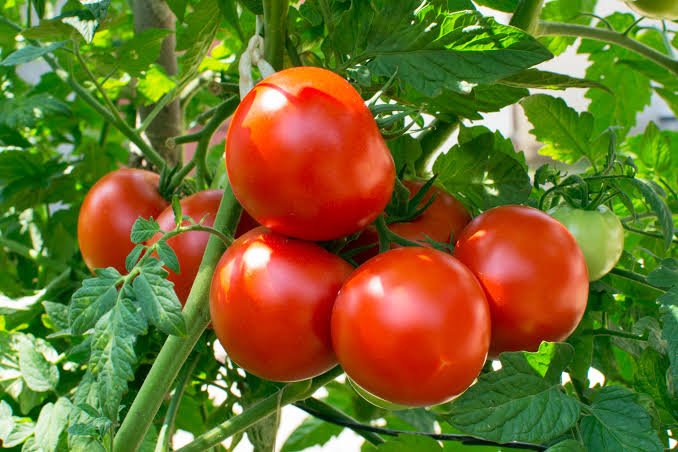
In order to properly care for the tomatoes, here are a few things you can do.
1. Minimize frequent irrigation of your tomato farm
Tomato plants have surprisingly low water needs and overwatering can promote diseases.
Once the fruit has started to form, water only when the top three inches of soil becomes dry and the leaves look limp in the heat of the day.
2. Water the tomato crop at ground level
Little can be done about water that falls from the sky, but don’t add insult to injury by showering your tomatoes with a sprinkler.
Irrigating your tomato farm with a sprinkler will only increase the spread of fungal diseases that thrive when the plants are wet. Instead, use drip irrigation or a soaker hose to apply water directly to the roots of the plant.
3. Water the tomatoes plants in the morning
By watering in the morning, you allow the moisture to evaporate quickly from the surface of soil.
This will provide the roots the water they need, but keep the humidity down around the plants.
4. Use straw or dried leaves to mulch your tomatoes
Mulching helps by covering the fungal spores in the soil.
It also helps to conserve moisture in the soil, so you don’t have to water as much.
5. Remove disease infected leaves from the tomatoes farm immediately
When you notice any spots or deformation on the leaves of the tomato plants, don’t hesitate to clip them off.
Doing this early may save the rest of the plant from succumbing to the disease.
After clipping the affected leaves, dispose them far away from your tomato plants.
6. Prune out dense foliage from the tomato stem
Tomatoes tend to grow more thickly than is necessary, reducing air flow and producing more foliage than their immune systems can support. To reduce this, prune out new sprouts that emerge from the main stems.
Do this once fruit has begun to develop and then train the plants to an open, spreading form.
7. Weed out all vegetation and make sure every other crop is low
Ideally, tomatoes should be planted out in the open with nothing but mulch, turf grass or other small stature crops (like basil or garlic) around them. That’s because tomatoes need a lot of airflow to grow effectively.
Thicket of weeds or a tall patch of corn or beans next to your tomatoes blocks airflow and keeps the humidity high at ground level.
8. Disinfect all tools used in the tomato farm
Maintain proper hygiene by disinfecting every tool you use on the farm. After pruning diseased tomato plants or after working on the soil around them, you should disinfect the tools before using on or around healthy tomato plants.
Also, be careful not to repeat the same tools on plants in the tomato family, such as peppers, potatoes and eggplant.
To disinfect your pruning shears, dip the tools in a 10 percent bleach solution or full-strength rubbing alcohol.
9. Control insect pests from affecting the tomatoes
It is rare for tomatoes to be destroyed by insects, but they are frequently attacked on a small scale. These attacks weakens the plants and makes them more susceptible to disease.
Typically, some of these insects are also vectors which are responsible for spreading diseases.
To disperse small sucking insects like scale, aphids and mites, spray an all-natural insecticidal soap on the plant.
As for larger bugs like hornworms and stink bugs, you can pick them off by hand.
Always, check the stems and both sides of the leaves if you see signs of insect damage. Follow the signs with immediate remedial actions if necessary.
10. Fertilize the tomato crop
Tomatoes are heavy feeders and will have greater disease resistance with a few boosts of fertilizer during the growing season.
Once the fruit has set, apply a high phosphorus fertilizer every three weeks.
 AGROCAST